Regular grooming is an important part of keeping your dog or cat clean, comfortable, and well cared for. But one common question pet owners have is: How often should I bathe and groom my pet?
There is no single schedule that works for every animal. The right grooming frequency depends on your pet’s breed, coat type, lifestyle, age, activity level, and individual needs.
At The Pet Care, we believe a simple and consistent grooming routine can make everyday pet care much easier.
How Often Should You Bathe Your Dog?
Dogs do not necessarily need frequent baths. How often your dog needs one depends largely on its coat and lifestyle.
A dog that spends a lot of time outdoors, plays in dirt, or gets noticeably dirty may need bathing more frequently than a mostly indoor dog.
You should consider giving your dog a bath when:
- The coat becomes noticeably dirty
- Your dog develops an unpleasant odor
- Mud or debris gets into the fur
- A veterinarian recommends a particular bathing routine
- Your dog’s coat requires specific maintenance
Avoid bathing simply because a fixed number of days has passed.
How Often Should You Bathe Your Cat?
Cats are generally good at keeping themselves clean through self-grooming.
Many healthy cats may therefore need baths only occasionally.
However, bathing may become necessary when a cat:
- Gets something dirty or sticky on its coat
- Cannot groom itself effectively
- Has a long coat requiring additional care
- Needs bathing based on veterinary advice
Bathing cats can be stressful for some animals, so keep the process calm and gentle.
Never force a highly stressed cat through an unnecessary bath.
Coat Type Makes a Big Difference
Your pet’s coat is one of the biggest factors in determining grooming frequency.
Short-Haired Pets
Short-haired dogs and cats generally require less brushing than long-haired pets.
Regular brushing can still help remove loose fur and surface dirt.
Long-Haired Pets
Long-haired pets usually require more frequent brushing because their fur can become tangled or matted.
Pay extra attention to areas such as:
- Behind the ears
- Under the legs
- Around the chest
- Tail
- Belly
Regular brushing can prevent small tangles from becoming difficult mats.
How Often Should You Brush Your Dog?
For many dogs, brushing several times a week can be useful, while some long-haired or heavy-shedding dogs may benefit from more frequent brushing.
The ideal schedule depends on the coat.
Brushing helps:
- Remove loose hair
- Reduce tangles
- Remove surface dirt
- Keep the coat manageable
- Give you an opportunity to inspect the skin
Always use a brush suitable for your dog’s coat type.
[IMAGE 2: Dog being gently brushed with grooming tools nearby]
How Often Should You Brush Your Cat?
Cats also benefit from regular brushing.
Short-haired cats may require less frequent brushing, while long-haired cats often need more attention to prevent tangles and matting.
Brushing can also remove some loose hair before the cat swallows it while self-grooming.
Keep sessions short at first if your cat is not accustomed to being brushed.
Don’t Over-Bathe Your Pet
More bathing does not always mean better grooming.
Excessive bathing, especially with unsuitable products, may dry or irritate your pet’s skin.
Always use shampoo specifically formulated for the animal you are bathing.
Avoid using ordinary human shampoo unless your veterinarian specifically recommends a product.
After shampooing, rinse the coat thoroughly so product residue does not remain on the skin.
Nail Care Is Part of Grooming Too
Bathing and brushing are only part of a complete grooming routine.
Your pet’s nails should also be checked regularly.
Overgrown nails can become uncomfortable and may affect normal movement.
How frequently nails need trimming depends on how quickly they grow and how naturally they wear down.
If you hear your dog’s nails frequently clicking against hard flooring, it can be a sign that they should be checked.
Never trim into the sensitive quick inside the nail.
If you are uncertain, ask a professional groomer or veterinarian for assistance.
Check the Ears and Eyes Regularly
You do not need to wait until bath day to inspect your pet’s ears and eyes.
During regular grooming, look for unusual:
- Redness
- Swelling
- Strong odor
- Excessive wax
- Discharge
- Irritation
Routine checks can help you notice changes early.
Persistent pain, swelling, odor, or discharge should be assessed by a veterinarian.
Remember Paw Care
Your pet’s paws come into contact with different surfaces every day.
Dogs that regularly walk outdoors may bring home dirt, mud, small stones, or other debris.
After walks, check the paws and clean them when necessary.
Look between the toes and around the pads for cuts, cracks, irritation, or foreign objects.
Pet-safe paw balm may also be useful for dry paw pads when appropriate.
Signs Your Pet May Need Grooming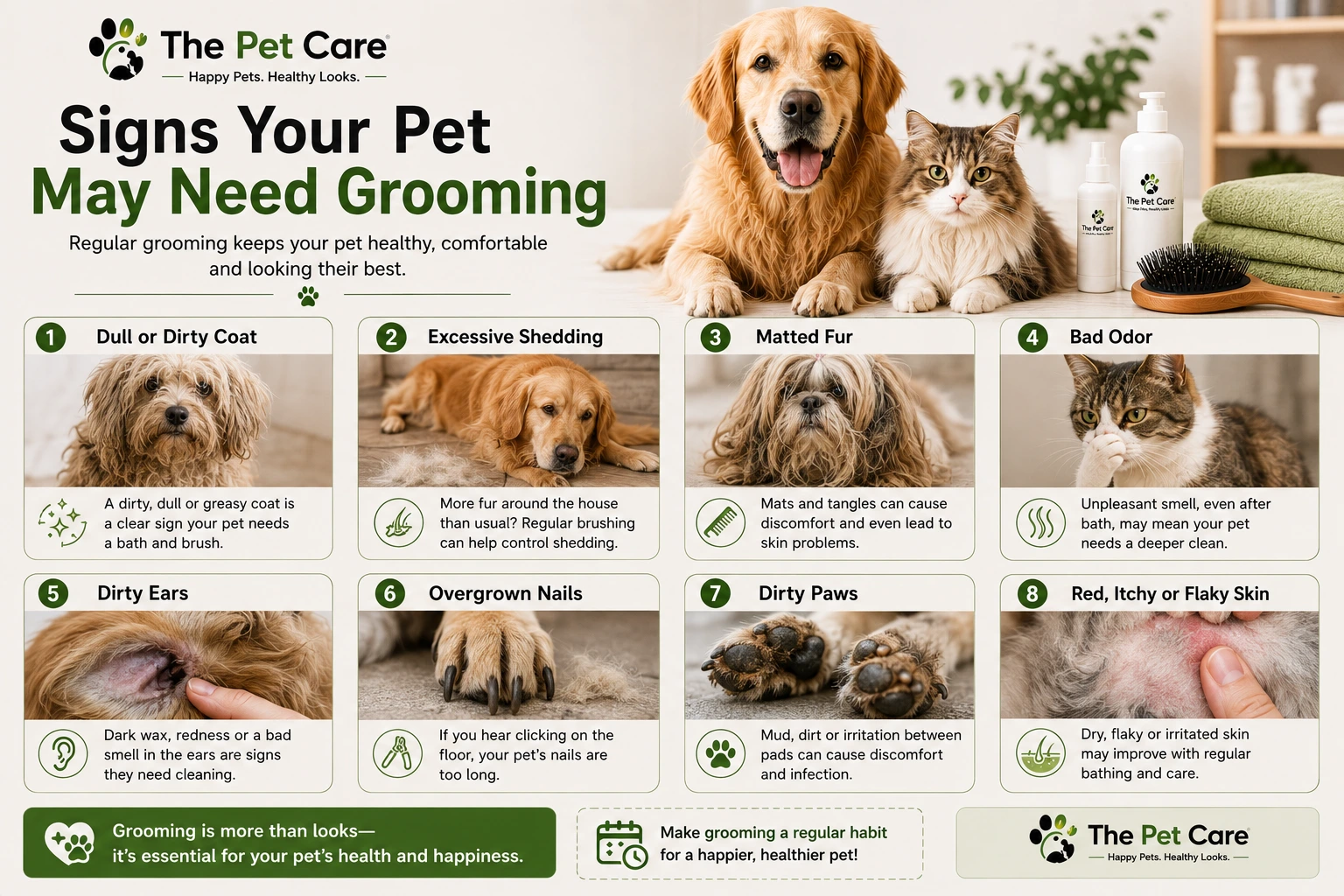
Instead of relying entirely on a calendar, pay attention to your pet.
It may be time for grooming when you notice:
- Visible dirt
- Unpleasant coat odor
- Excessive loose hair
- Tangled fur
- Matted areas
- Overgrown nails
- Dirty paws
- Coat that is becoming difficult to manage
Changes such as persistent itching, unusual hair loss, wounds, redness, or skin irritation should not simply be treated as grooming problems. Speak with a veterinarian if you are concerned.
Create a Grooming Routine
A simple routine makes pet grooming easier to manage.
For example, you can regularly:
- Brush and inspect the coat
- Check the paws after outdoor activity
- Examine nails
- Look at the ears and eyes
- Maintain dental hygiene
- Bathe when necessary
The schedule can then be adjusted according to your pet’s individual needs.
Home Grooming or Professional Grooming?
Many basic grooming tasks can be performed at home with appropriate products and techniques.
However, professional grooming may be useful for:
- Difficult coat types
- Heavy matting
- Hair trimming
- Pets that are difficult to handle safely
- Grooming tasks you are uncomfortable performing
Professional groomers can also help you understand what type of routine may work for your pet’s coat.
For medical skin, ear, eye, or other health concerns, consult a veterinarian rather than relying on grooming alone.
Give Your Pet a Routine That Works for Them
There is no perfect grooming timetable for every dog or cat.
Some pets require frequent brushing but only occasional bathing. Others may become dirty more frequently because of their lifestyle and need a different routine.
The best approach is to consider your pet’s coat, lifestyle, comfort, and individual needs.
At The Pet Care, we believe grooming should help your pet feel clean, comfortable, and cared for.
Happy Pets. Healthy Looks.
Keep grooming gentle, use suitable pet-care products, and adjust the routine according to what your dog or cat actually needs.